
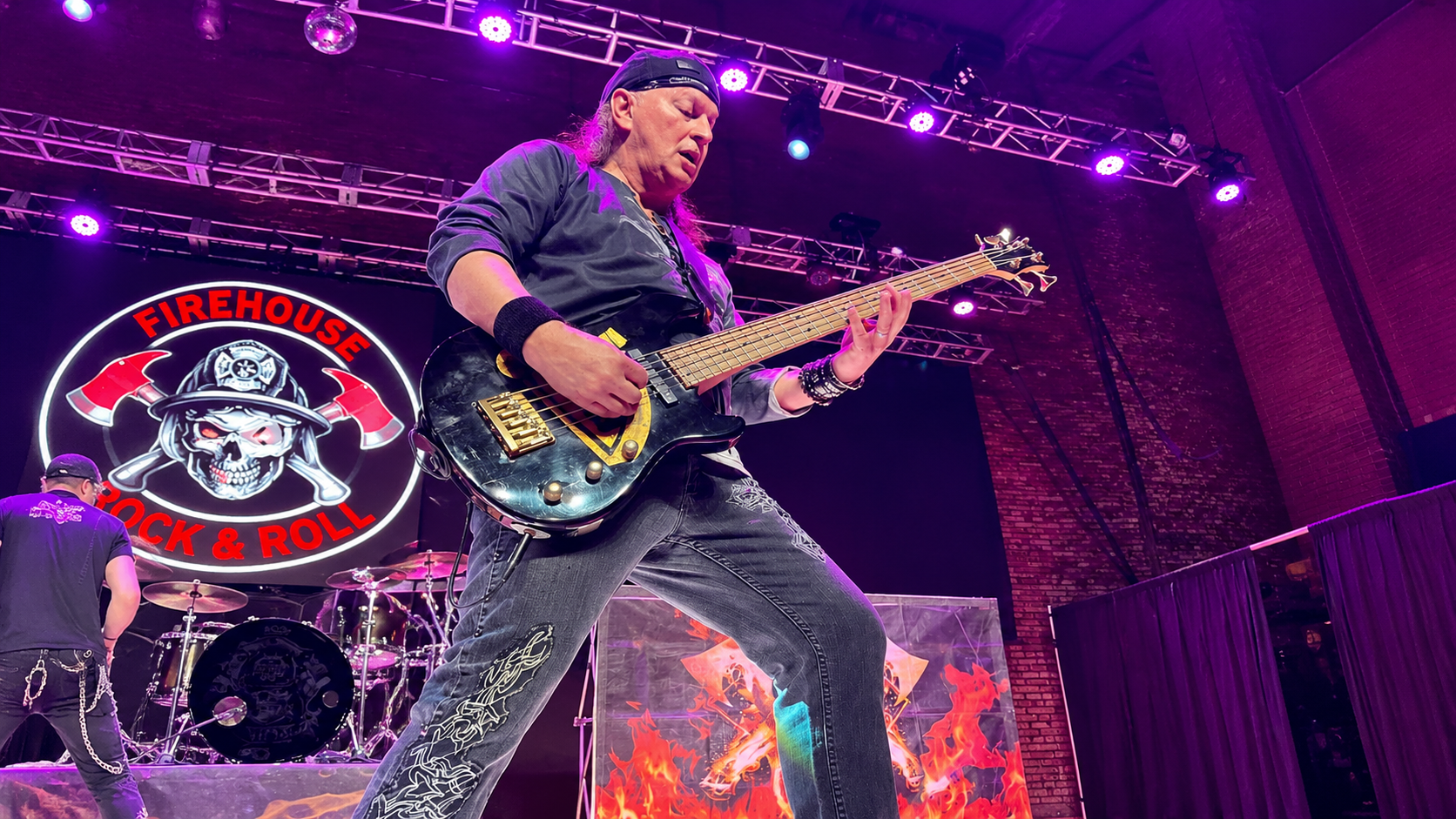
Alan McKenzie has spent decades building a career around music, moving through progressive rock, hard rock, songwriting and live performance before finding his place as the bassist of FireHouse. During his conversation with Press Play Radio Conversations, McKenzie looked back on the many chapters of his musical journey, from growing up in Ohio to discovering the bass almost by accident and eventually stepping onto some of the biggest stages of his career.
Born in Columbus and raised in southern Ohio, McKenzie developed an appreciation for music at an early age. His move to Northeast Ohio during his senior year of high school initially felt difficult, but he soon discovered a thriving music scene that would have a major impact on his musical development. The area was filled with bands, clubs and musicians, and McKenzie found himself surrounded by the kind of environment that encouraged him to pursue music seriously. He also saw firsthand the musical legacy of the region, including the role Cleveland radio played in helping bands such as Rush find an audience.
McKenzie's path to becoming a bassist was anything but traditional. He had started playing guitar when he was nine years old and had always been able to sing, but bass was not originally part of his plan. In 1984, while playing with a progressive rock cover band called Drama, McKenzie picked up a bass during a rehearsal simply because he was bored. He began jamming with the guitarist and drummer while singing lead, despite never having played bass before.
His bandmate Scott Summers immediately recognized something McKenzie himself had not. Summers encouraged him to pursue bass, telling him that his combination of singing and solid bass playing could keep him working for years. McKenzie took the advice seriously. At the next rehearsal, he returned having learned the entire Rush album All the World's a Stage. That unexpected change in direction would ultimately become one of the most important decisions of his career.
Progressive rock remained an important part of McKenzie's musical identity. During his time with Quest, he returned to singing and keyboards and eventually had the opportunity to open for Yes at Blossom Music Center in 1994. The experience came during a challenging period for progressive rock, when alternative music and bands such as Pearl Jam and Smashing Pumpkins dominated the musical landscape. McKenzie remembers his progressive rock band standing out in an environment where the genre was not necessarily at the forefront of popular music.
McKenzie's influences stretch across generations and genres, but classic rock, progressive rock and metal have remained at the center of his musical world. Alice Cooper made a particularly strong impression on him when he was young. He bought Love It to Death with money he earned mowing lawns when he was only eleven years old, and Alice Cooper was also the first concert he ever attended. From there, he discovered artists including Black Sabbath, Uriah Heep, Rush, Kansas and Genesis.
His journey eventually brought him to FireHouse. Before joining the band, McKenzie had played with Janie Lane's solo band and had also been part of Peace Tree, where he played bass and sang the harmony vocals. Peace Tree's album Nice to Meet You was nominated for a Cleveland Three Times Music Award, giving McKenzie another important chapter in his musical career.
His opportunity with FireHouse came through a connection from his time with Janie Lane. Billy Morris, who had also worked with the project, sent FireHouse a videotape of McKenzie performing. The band then asked McKenzie for studio recordings, and he sent them Peace Tree's music. The recordings eventually led to a call from Bill Leverty and an opportunity that would change the course of McKenzie's career.
Joining FireHouse meant stepping into an established band and quickly learning an extensive set list. McKenzie recalled having only days to prepare before being flown directly to an arena in Council Bluffs, Iowa. His first performance with the band was not a comfortable rehearsal environment but an arena show, giving him an immediate introduction to the reality of life on the road with FireHouse. Despite the pressure, he quickly developed a natural musical connection with drummer Michael Foster, something that has remained an important part of the band's sound.
That chemistry also comes with plenty of humor. McKenzie shared stories about the good natured ribbing within FireHouse, including an early prank from Bill Leverty designed to make him think he had made a mistake onstage. McKenzie eventually developed his own playful introductions for his bandmates, showing the camaraderie that exists within the group.
McKenzie also reflected on the passing of longtime FireHouse vocalist CJ Snare and the arrival of Nate Peck. Having spent two decades alongside Snare, McKenzie described his loss as a profound moment for the band. He explained that Snare had already been working with Peck and had even discussed the possibility of Peck becoming FireHouse's lead singer. For McKenzie, Peck is not a replacement for Snare, but someone who honors his legacy while helping carry FireHouse into its next chapter.
One of the most exciting aspects of FireHouse's continued career for McKenzie is seeing younger generations discovering the band's music. He has noticed more young people attending FireHouse shows and singing along to songs that were released long before they were born. For McKenzie, that is a reminder that great music can continue finding new audiences decades after its original release.
When it comes to performing live, McKenzie appreciates venues that allow the band to connect closely with the audience. He singled out Epcot as a memorable performance location and also praised the Arcada Theater near Chicago. For him, old school theaters offer something special because of their intimacy, acoustics and ability to bring the musicians and audience closer together.
Outside of FireHouse, McKenzie's passion for music continues through his love of instruments and gear. He recently picked up a Squier Classic Vibe five string Jazz Bass and spoke enthusiastically about its tone and playability. He also shared a memorable story about finding a Rickenbacker bass at a pawn shop for only $300, later realizing that it was worth thousands more than what he had paid.
McKenzie's story is ultimately one of following opportunities and being willing to take an unexpected path. He never originally planned on becoming a bassist, yet that spontaneous decision in a rehearsal room eventually led him to a career that has included progressive rock, classic rock, major stages and decades of live performance with FireHouse.
Through every chapter, his love for music remains at the center. Whether he is talking about Alice Cooper, Rush, Genesis, Marillion, progressive rock, FireHouse or the next generation of musicians discovering this music for the first time, McKenzie's enthusiasm is unmistakable. His journey proves that sometimes the most important moments in a musical career begin with simply picking up an instrument and seeing where it takes you.