
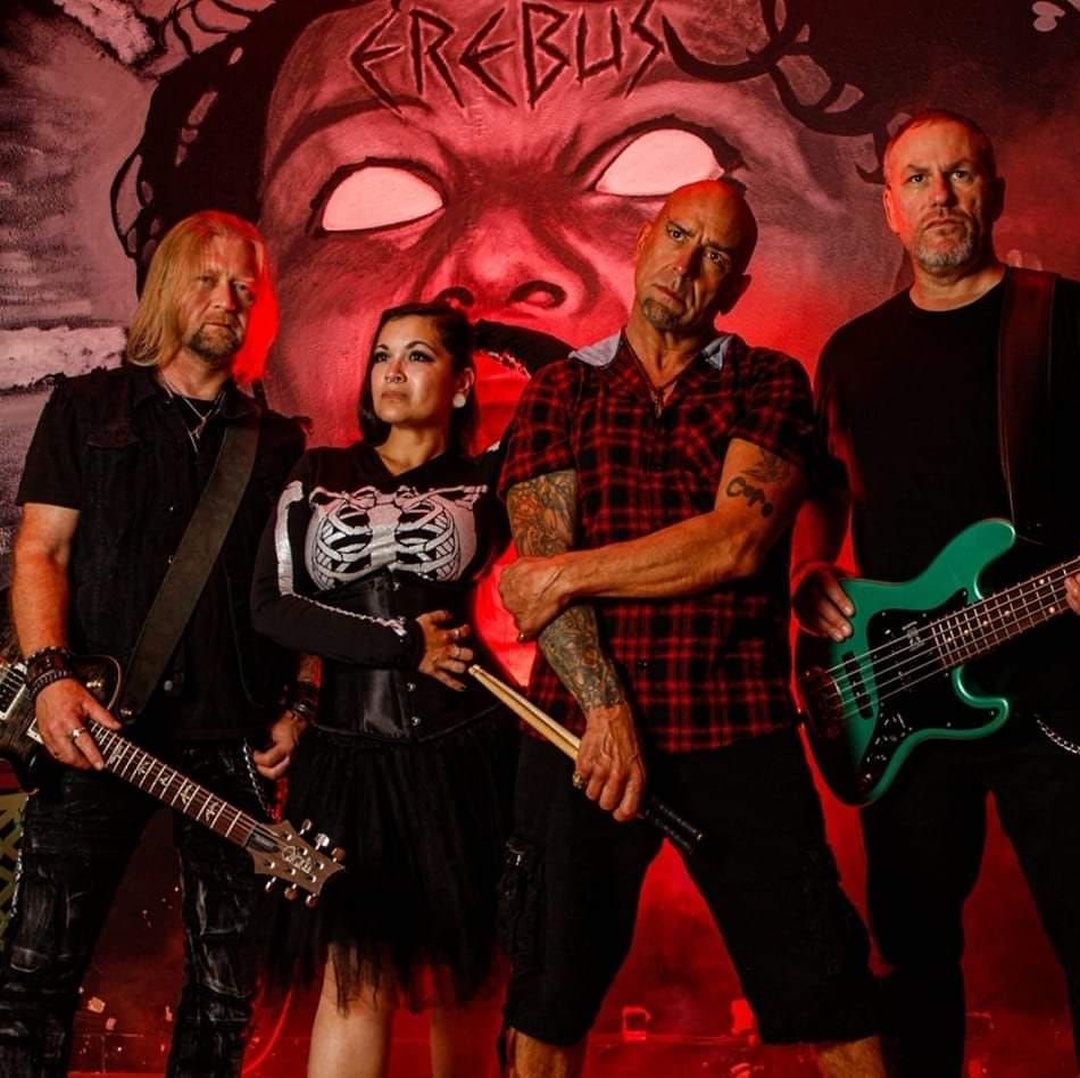
For Beautiful Skeletons vocalist Tina Firefly, music has never been something she could simply walk away from. It has been a constant presence throughout her life, shaped by an unconventional upbringing, a wide range of musical influences, and an undeniable need to create. In a recent conversation with Press Play Radio, Firefly and guitarist Einar Einarsson opened up about the band's beginnings, their individual musical journeys, the stories behind their songs, and the creative chemistry that continues to bring their music to life.
Beautiful Skeletons came together in 2017 through a Craigslist advertisement, a meeting that Firefly still remembers with a sense of humor. After giving birth to her youngest child, she found herself ready to return to music and posted an advertisement looking for a band. Einarsson reached out, inviting her to come jam with the group after hearing her previous work. Initially skeptical of his name, which she jokingly thought sounded like a terrible fake identity, Firefly soon discovered that Einar Einarsson was, in fact, his real name. What began as an unexpected connection eventually became the foundation of Beautiful Skeletons.
Firefly's relationship with music began long before the band existed. Growing up on a small island in the South Pacific, she had limited access to recorded music. Her early musical education came from an unusual combination of influences. Her father introduced her to music from the 1920s, disco, and musicals, while her mother exposed her to the powerful female voices of the 1980s, including Gloria Estefan, Mariah Carey, and Toni Braxton. Firefly recalls learning entire musical soundtracks before she had much access to contemporary rock music.
It was not until high school that she began discovering the music of the 1990s, opening the door to a new world of artists and sounds. Her more recent influences include Alanis Morissette, Maria Brink, and Alyssa Gutierrez, alongside bands such as Kittie, Nickelback, and Static-X. Firefly describes the band's shared musical ground as largely rooted in the alternative rock and metal of the 1990s and 2000s, although each member brings a different musical background to the group.
For Einarsson, the journey toward becoming a guitarist began in the early 1980s. Iron Maiden, Scorpions, and Van Halen were among the artists that initially captured his attention. He first gravitated toward drums, but eventually found his way to guitar. His introduction to the instrument came through an old Fender Jaguar belonging to a friend's father. While waiting for his friend before school, Einarsson would pick up the guitar and play. What started as a casual habit gradually became a lifelong passion.
Despite their different musical beginnings, Firefly and Einarsson share a creative connection that allows Beautiful Skeletons to explore a wide range of sounds. Einarsson often begins the songwriting process by developing guitar riffs, while Firefly builds the melodies and lyrics around them. The band's collaborative approach allows songs to evolve through experimentation rather than remaining tied to their original ideas.
That process is particularly evident in the creation of “Running Cold.” Einarsson explained that the guitar riff had been sitting in the band's collection of unfinished ideas for some time before it finally found its place. Once Firefly began adding vocals and lyrics, the band experimented with different tempos and arrangements until the song began to take shape. “Come What May” followed a similarly unconventional path, with its introduction and verses originally coming from two separate songs. Drummer Huwy Williams suggested combining the different sections, resulting in the finished track.
For Firefly, songwriting is also an opportunity to explore subjects that are deeply personal. During the interview, she discussed writing lyrics while sitting in a hospital waiting room, explaining that the experience inspired a song intended to offer comfort to people struggling with similar situations. Her approach to songwriting is rooted in empathy, allowing her to transform personal experiences into music that can connect with listeners.
That emotional honesty also appears in “Dropping Anchor,” a song Firefly described as an acknowledgment of men who find themselves trapped in abusive or controlling relationships. She wanted to explore the way toxic relationships can gradually change a person's identity, leaving someone who was once a good friend feeling bitter and isolated. The song challenges the assumption that these experiences only happen to women, bringing attention to a subject that is often overlooked.
While Beautiful Skeletons are known for their heavier material, the band does not shy away from slower songs or unexpected changes in energy. Firefly admitted that she sometimes questions whether a ballad will connect with an audience, particularly when the band is performing alongside heavier acts. Einarsson, however, often encourages her to embrace those moments, believing that rock and metal audiences can appreciate a broader range of musical expression.
The band's approach to live performances reflects that philosophy. Einarsson explained that building a setlist is about creating a sense of movement, beginning with songs that establish energy, allowing the audience moments to breathe, and finishing with a strong closing sequence. The band has often used “Head Case” as an opening track because of its gradual buildup, while “Kraken” has become a familiar closer.
Touring has also given Beautiful Skeletons the opportunity to share the stage with legendary musicians. Firefly spoke about the experience of performing alongside Yngwie Malmsteen, describing herself as blown away by his stage presence and consistency. Despite the strict rules and particular expectations that came with the tour, she emphasized her respect for his musicianship and the experience of watching a legendary guitarist perform night after night.
As Beautiful Skeletons continue moving forward, the band is also adapting to a new chapter in its creative process. Firefly recently relocated to Raleigh, North Carolina, while the rest of the band remains on the West Coast. Although the distance presents challenges, she explained that the group continues to write by sharing different versions of songs, refining arrangements, and recording once the pieces come together. Touring will require additional planning, but the band remains committed to continuing its work.
At its core, Beautiful Skeletons is a band built around the belief that music is something deeply personal. For Firefly, it is an essential part of who she is. For Einarsson, it has been a constant presence since childhood. Together, they continue to create music that embraces heavy riffs, melodic expression, humor, and emotional honesty.
With a willingness to experiment and a commitment to telling meaningful stories, Beautiful Skeletons are continuing to develop their sound while remaining true to the experiences and influences that brought them together. Their conversation with Press Play Radio offers a glimpse into the people behind the music, revealing a band whose creative connection extends far beyond the stage.