




"Speaker 4 (00:03)
Progress!
Speaker 3 (00:09)
So now we're just trying to get, I guess, Tina on. I guess that's Trent.
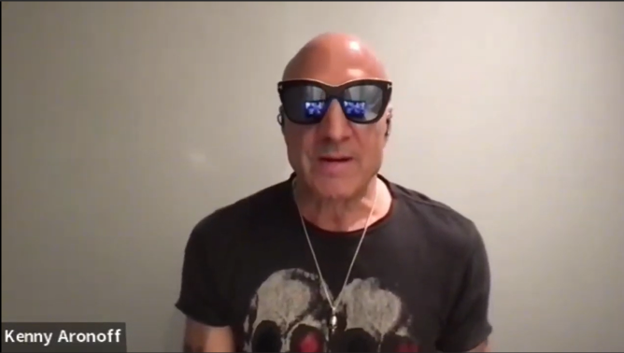
Kenny Arnoff (00:15)
Dean, where are you located?
Speaker 3 (00:17)
Raleigh, North Carolina.
Kenny Arnoff (00:19)
That's right, yeah. Alright, been there many times. Not for a while, but I've been there.
Speaker 3 (00:27)
Yeah, we're just getting out of pollen season right now.
Kenny Arnoff (00:30)
Oh right, that's right. I used to have horrible allergies as a kid. I don't know how I outgrew them. In California, season is pretty brutal, especially because it's been raining on and off quite a bit. And so all of a things that haven't bloomed in years is blooming. So I mean, I'm not having a problem, but the people that have allergies is brutal.
Speaker 4 (00:55)
So Kenny, you were just talking about learning all kinds of fun stuff for Van Halen.
Speaker 3 (01:03)
Yeah, I question about that. know you do too, Doug.
Speaker 4 (01:06)
I hear you're doing a residency in Vegas.
Kenny Arnoff (01:09)
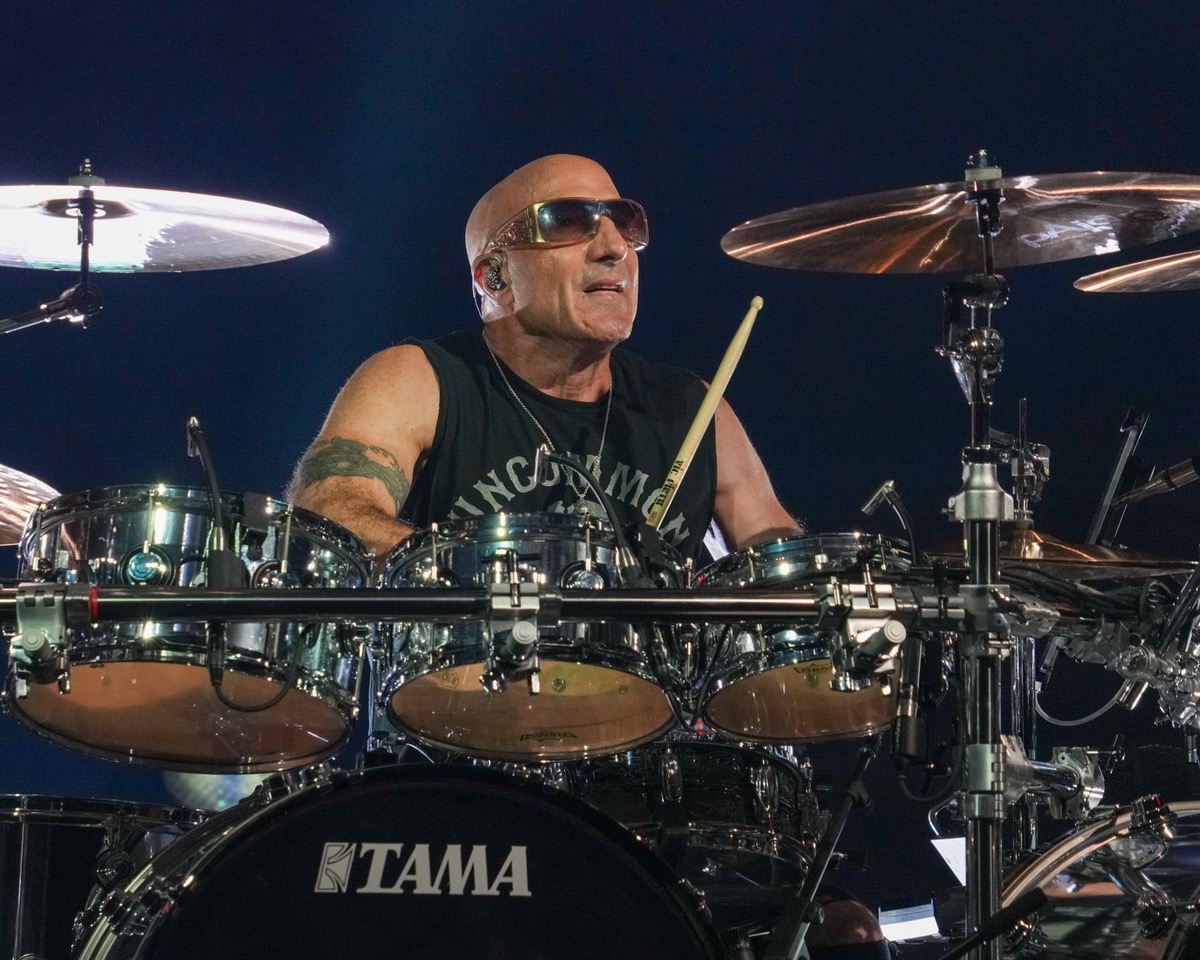
Well, I've been playing with Sammy on and off for quite a while. I Chickenfoot in 2012 or 2013. ⁓ And then I started doing gigs with him when... I do gigs with him here and there and I was learning the Van Halen, Sammy Agar, Montrosian, Chickenfoot, you know.
vocabulary as they would say and then now with this best of all worlds tour that and we're doing the residency in Vegas and doing ⁓ you know the one show at ⁓ it's not it's not what do call it it's not Coachella it's the other one that's right next to it but anyway we're doing
No, no, no, it's a spacing out. I'll figure it out. ⁓ But we're doing a lot of Van Halen songs that Sammy doesn't always do and ⁓ bring like songs like Amsterdam and, you know, human beings and things that brings, you know, the audience to hearing Van Halen songs I haven't heard for a long time. So Joe is being Eddie and I'm being Alex, basically.
Speaker 4 (02:27)
I think Michael Anthony and Sammy Hagar should go bald too to match with Joe. That'd be the coolest fucking concept.
Kenny Arnoff (02:35)
Well, and they'd be four bald brothers. Well, I always tell Joe, you're going to play, I want you to play 5150 or, you know, I'll pick a real hard song. It says, come on. It says that you, you, look alike, you know, nobody will know the difference. ⁓
Speaker 4 (02:39)
Yeah
It looked
like it's crazy.
Kenny Arnoff (02:57)
But I'm not gonna be playing guitar, that's for sure.
Speaker 4 (03:00)
What's your, Kenny, what's your favorite Van Halen song? When you think of like the first one you go to in your mind, like when you think Van Halen.
Kenny Arnoff (03:09)
There's too many. And I'll tell you why there's too many. When Sammy asked me to put the set list together for a show we did, I couldn't believe he asked me to do that. And I said, are you kidding? He said, nah, you do it. And I started looking at every single song you could start the show with. Can you imagine starting with, you know, Pound Cake? Or Top of the World, or Run Around, or, you know, any of those guitar riffs could start. So every song was like...
Speaker 1 (03:28)
God, dude.
Kenny Arnoff (03:37)
could be the beginning and the closing of those shows. It's like when I played with Fogarty, every song was a familiar song.
Speaker 3 (03:50)
I remember when you were talking about right here, how it was like a half beat off.
Kenny Arnoff (03:55)
Oh, right now, right now. Yeah, right now. It starts off a 16th note off. lot of, you know, lot of the songs, any would start things not on the beat. Like that, well, that starts with keyboards with one, two, three, four, one. And, know, it's one, two, three, four, one.
One, two, three, four. Run around. That starts on the and of four. ⁓ I mean, One, two, three, four. ⁓ It's everything starts, or a lot of the songs start off the beat. And Andy would...
I keep thinking of Eddie's smiley face going like, haha, try to find the beat. And then he and Alex would work all these parts out together. Sammy explained to me they'd spend maybe a week together, one in front of the other, right there, creating all this stuff. And then Sammy would have to come in and then create his parts on top. Very clever, very angular, extra beats, weird accents.
⁓ Me and Joe just text each other about Amsterdam. I'm like, whoa, my God. This isn't like playing like the blues or like a Fogarty song or a Mellocamp song. It's just that it's all kinds of wacky parts that they spend a lot of time creating, you know, with each other.
Speaker 4 (05:35)
The
Speaker 3 (05:35)
You
have to learn a bunch of stuff. We were texting back and forth about charting. Let's say you're constrained for time. I asked Brent Fitz this a couple weeks ago in Vegas when he was getting ready for a Brother Kane gig. Let's say you're flying in a plane, you're listening, you're charting it out, and then when you get there, boom, it's go time. Do you get any time to actually practice, or is that just sound check? It's your practice.
Kenny Arnoff (05:57)
Well, that's a great question. Well, when I had to do that emergency fill in for Jason Bonham when his mom got real sick and he had to go see her, all of sudden I get a call, you know, got to get on a plane in 23 hours. Now I'd gotten a little heads up, but that was 45 pages.
⁓ very very very detailed charts. I mean every note written out. And you know I flew to Cincinnati from LA
landed six in the morning. I didn't even know if I was going to be playing that night because it was possible that Jason wasn't leaving that night and then I'd watch him play. ⁓ Which I'd already seen one show at the Forum and so at least I got, I saw that wow these arrangements are different. So at least I knew that but I mean I had to play his drum set. I had two hours to adjust his drums so that I could you know because I could read and hit things like this and it's all muscle memory. I know exactly
exactly how to get the job done at this point in my career. It's not casual. It's extremely intense, extremely focused, and you just do the best you can do. So that was that part of it. There's like count-off, there's click tracks, and there's pads, and just all kinds of stuff to deal with. Then there's the flow of the show. It's not like you just, hey, we're gonna do this song now. It was the show.
When I got the call, I had 23 hours, I said I want a board tape and I want a video of the show. And all I did was watch it, watch it and write everything out. And then I discussed everything with these guys. We had 90 minute. ⁓
soundcheck basically. There was no way we could go through the whole thing. No way. And so I just, when I do intense shows and when I've done all these intense TV shows that I've done like the Kennedy Center Honors or show like, you know, where I'm playing with 24 artists, when everybody goes to dinner and I've got like an hour and a half, I practice by myself. The count off, start playing, go to the end, do the end.
Adjust my metronome or my drum machine to the next... I make sure that all the charts are lined up with all the tempos in my machine. And I do that two or three times, make sure so that... because we've never run the whole show. And so I practice counting off the beginning, switching the tempo while I'm playing, go to the end, count off the next song.
and do the same thing all the way through the show for about 45 minutes, run in, get dressed if I'm lucky, I get food in. And then I, you know, we got 14 camera shoot and they're recording it. I cannot mess up. And then I also write on my charts the flow of who's coming on stage, going off, who do I look at, who tells me when to count off. I go through the entire flow of from song to song to make it seem like it's seamless. Wow.
Speaker 4 (08:59)
That is insane.
Kenny Arnoff (09:00)
You have to know what questions to ask to then solve the problem.
Speaker 4 (09:08)
Kenny, is there a drummer that you look up to? Like, if there were a couple drummers that you're like, these are like the gods of drumming, who would they be? Really?
Kenny Arnoff (09:19)
He's about a thousand of them.
Come on. I could list a thousand great drummers. John Bonham, Mitch Mitchell, Dave Grohl. I could go on and on on. Mike Portnoy from Dream Theater, Danny Carey from Tool, the drummer from Anthrax. I could go on, the drummer from Megadeth, Ringo Starr, Charlie Watts. Who's better?
Who's better? I ain't even got into Buddy Rich, Buddy Rich, Elvin Jones, Philly Joe Jones, all the great, Louie Bellson. I could go on and on and on and on. They're all brilliant. All of them.
Speaker 4 (10:00)
What do you think about when you're added to a list like Rolling Stones top one on the drummers? How does that make you feel when you're listed in a Rolling Stone article?
Kenny Arnoff (10:10)
Well, I definitely, you know, I felt grateful I was in that list. That's a pretty impressive thing to be in. And of course, it's subject to the person who's putting that list together. I have a phrase that goes, I'll never be as great as I want to be, but I'm willing to spend the rest of my life trying to be as good as I can be. And that comes from a humble position of understanding that
You're a human being and I know I'll never be as great as I want to be. I know I won't. I'm not a robot. But it's like a running back in football. These guys are monster athletes. But they don't score touchdowns every time they get the ball. Sometimes they do and then sometimes five yards, two yards, minus two fumble, break their leg in preseason. And they come back and this is the takeaway. They come back because they friggin' football. It's their life. That's it.
And me, even at my young age, I'm exactly the same way as I was when I was starting to do this. I am not a retiring guy. I'm a pit bull. I'm like Michael Jordan or, you know, it's like I'm obsessed with being great and I know I'll never be as good as I want to be, but I don't mind trying. I cross the T's, I dot the I's. I know how to get from A to Z. And sometimes you don't have enough time.
You do your best, I understand the process of how to be great on a daily basis.
Speaker 4 (11:38)
have a real quick question for you. I actually had the opportunity to sit down with Kenny once before and we were going through his song story and I was learning a little bit about where he came from and he started, you started basically classical drumming, correct? And then you went at, no.
Speaker 3 (11:54)
Okay. Marimba.
Kenny Arnoff (11:55)
⁓
I eventually did, but I... No, that's right, Dean, you found that. That was brilliant. You found that. That was brilliant. No, I saw The Beatles on TV. Look, I grew up, my parents were from New York. The turntable was jazz, classical music, you know, Broadway shows.
Speaker 4 (11:59)
Tell me a little bit it.
Kenny Arnoff (12:18)
But I was seeing jazz drummers from like Stan Getz and that was, I'm spacing his name. I was seeing all the big jazz drummers. My parents were into the big band stuff and jazz, know, and Buddy Rich and all that stuff. But then when The Beatles came on, the Ed Sullivan Show and I saw that, went, whoa, that was the second, the millisecond I realized my purpose in life. I didn't know who they were, where they were from, but I said, mom, I wanna do that.
And who are those guys? I they're the Beatles. went, well, I want to be in the Beatles. I want to do that. And so call them up and get me in the band. And that drummer can say, but I want to play with them. And so I said, forget the piano. I'm playing drums now. I mean, it wasn't coming from here. It was coming from here. I got to do that. It ignited me. was the greatest thing that I've ever seen. So I didn't know.
I mean, I didn't know how to go about it, you know. My parents didn't call the Beatles up and they didn't buy me a drum set. So I'm like, what do I do? How do I do this? I knew that I wanted to do it, but I didn't know how to get there. So they saw I was going crazy buying records. You know, I'd get on my little bike and get by, you know, 45s.
And they finally bought me a snare drum and a cymbal. I started banging on that stuff and I started a band called the Alley Cats at age 10. In the Alley Cats we played five Beatles songs and I would dream I was in the Beatles and grow my hair and girls going crazy over me, which of course the hair thing never quite worked out. you know, I was into it so much that fire and that passion has never left me since. So all the way through
you know, 10 years old until I graduated high school, I was always in the best bands and self-taught. And then I, there was some kid getting better than me in my little town of Stockbridge, 3,000 people. And ⁓ I said, Tommy, what are you, man, you're getting really fast. So I'm taking lessons from this percussionist from the Boston Symphony Orchestra and their summer festival was three miles from my house. So I went, well, I'll do that.
This guy, this was like taking lessons from a Marine surgeon. This was like, there was no entitlement, laziness. If you didn't show up and you weren't prepared, get out of here. And so he started me on mallets. I mean, the first lesson, the first lesson, I'm not even in his house. goes, what's your name? said, Kenny. Kenny what? Went Kenny Aaron on.
What have you prepared for me today? I'm like, what? Well, do you have a mallet piece? And I went, I don't even know what mallets are. Because see, in high school, I wasn't part of the marching band. I wasn't part of the high school band because I had a rock band. And so why would I want to do that when I was playing in clubs at 13 years old? So he said, well, have you prepared a timpani piece for me? I went,
I never played timpani in my life. And he looked at me like, what are you doing here? What do you play? I went, well, I play drum set. ⁓ drum set. So we go downstairs, he says, he puts on blood, sweat and tears spinning wheels. Well, I had been practicing to that, know, jamming with my headphones with the stereo. In about 30 seconds, he ripped me off the drums and pointed to a practice pad, stripped me down from the beginning. And that's where my training
My legit training really started. So I did about two years with him, good enough to get into a school, University of Massachusetts, we had an okay music program. And I spent that first year, 24 seven, trying to catch up and do basically in one year, what I should have done in high school or nine, 10, 11, and 12. And ⁓ that's how, and then there was this cellist.
She was pretty hot. And I said, what are you doing this summer? said, I'm going to Aspen. I said, what's Aspen? She says, well, Aspen's an elite music program run by Juilliard. So Indiana was number one, Juilliard's number two, Eastman's number three, as far as classical. And the reason why, by the way, I went and started studying classical music in college is because back then there was no school of rock. mean,
You just need to move to a city and try to make it. I was not ready to do that. I felt like I needed to get more education. I picked music as my education, but it was classical. And I always played in rock bands. And while I was at UMass, Eastman was five hours up the road in Rochester. I auditioned, got in, but they didn't have room for a transfer student. In other words, I qualified, but they didn't have room.
Now, I hear about this summer program at Aspen run by Juilliard. I'm thinking, well, I'm going go there and she'll be there, which would be cool, but maybe I can transfer to Juilliard. I audition with tape and, you know, timpani, mallets, multiple percussion.
and snare drum. I don't hear it from anybody. Last day of school, I decided I'm going to study with the percussionist from the Boston Symphony Orchestra. I got an Allman Brothers band I'm going to play this summer. I'm going come back to UMass. The day I leave to go home, I went, I forgot my mail. I drive back, get my mail out. I went, I got a check from somebody. Open it up. You've been accepted to Aspen.
Two weeks later, I'm an Aspen, the worst percussionist there. These kids were like, so advanced. They were the elite. The teacher who taught there ran the percussion department at Indiana University, the number one school of music in the country. And I demanded an audition. He told me, no, come back in January. I said, no, I want to audition this summer right here. He said, no, come back in January. I said,
No, I want to audition right here and I want to go to Indiana from Aspen, Colorado. I want to go to IU. He went, wow, okay, this guy's serious. So I auditioned and I got in and I worked my way up through the ranks from the worst. mean, on Friday and Saturday nights, people are out partying. I was practicing until midnight. Then I go out and I just caught up and caught up.
And every year in the spring, I audition to the number one most elite student orchestra in the country, if not the world, run by the Boston Symphony Orchestra at their summer festival, Tangwood, three miles from my house. I audition the first year, strike out. Audition the second year, strike out. I audition the third year, strike out. I go back a fourth year and I get in. Only seven percussions in the whole world.
or in that program at one time. And I'm working with Leonard Bernstein, Aaron Copeland, Sejuah Zahora, all the conductors that conducted the Boston Symphony Orchestra. I do one more year at IU and I get into the Jerusalem Symphony Orchestra. And here is the takeaway from this story. I turn it down and everyone's like, what? My parents said, they're going to let you, we invested all this money in you to...
do exactly this. turned it down because I still wanted to rock. I wanted to be in the rock band. So that, I spent four years.
⁓ I spent a year practicing, eight hours a day, seven days a week, starting with a drummer from New York, a drummer from Boston, moved to Indiana, started my own band. The business model was you write songs, you get a record deal, they pay for you to make a record, you go on tour, sell records, and maybe they give you more money, do it again and again again until you become big. Well, we never got a record deal. And one week from leaving...
You guys probably know the story. One week before I was to move to New York, I'm having lunch with this girl. She asked me what I was doing and I said, I'm gonna go to New York, try to make it. She says, man, you're gonna kill it. And then she mentioned this guy who has a record deal, who's on this new platform or this new network called MTV. He's got songs on the radio and it was Johnny Cougar. And I went.
She said he had just fired his drummer the night before. They'd just come off tour. And I went, oh my God, radio, records, touring, TV. Oh my God, this is what I want to be doing. So I went right to a pay phone, called up Mike Wanchek, said, hey, Mike, this is Kenny. We knew each other. I said, I heard you might be looking for a drummer.
Speaker 1 (21:08)
Bing bing bing!
Kenny Arnoff (21:27)
Anyway, I ended up auditioning two weeks later, five weeks later, I'm in the studio in California making, trying to make, nothing matters more what if it did and I got fired after two days and you know, I didn't understand, I didn't understand this. I didn't understand how to serve the song. I didn't understand how to serve the artist. I didn't understand how to be a great drummer for that guy or for that band.
I didn't understand it's not about me, it's about we. I didn't understand it's not, oh, I gotta be the right drummer. And this is something I realized later was that the purpose of a drummer or any session,
Speaker 1 (22:01)
⁓
Kenny Arnoff (22:12)
musician making a record when you're talking about radio. The purpose is to get the song on the radio to be number one. It's not about me. If it means don't play, whatever I can do to get that song on the radio to be number one. That is the North Star. That's my trajectory. That's my goal. And ironically,
Two years later, I'm on the number one hit single, Jack and Diane. After getting fired, two days after making Nothing Matters From What If It Did, I thought my whole world was falling apart. And two years later, I had learned, when I got fired on Nothing Matters From What If It Did, I had learned, I've got to try to be a great drummer for John Couger and the way he writes music.
And that's what started to get the wheels spinning. And the ironic thing is, the first day, I'm going back to it, first day at IU, my mom came out and me and my mom and the professor who ran the percussion department, walking around and my mom's like, hey, Mr. Gaber, can he even, can he make a living hitting drums?
And then she goes, mean, he's even talented enough to have a career in music. She looked at him and went, Mrs. Aronoff, I have no idea. It's up to him. Ask that question in 10 years. About three years ago, I went, I wonder what 10 years was after that day. 10 years to one month. 10 years in one month. Jack and Diane was number one.
Speaker 4 (23:56)
Wow.
Kenny Arnoff (23:58)
So that guy was, he knew, dude, this is, it's up to him. ⁓
Speaker 3 (24:05)
I'm
curious, in listening to you talk, so right now I'm actually working on a documentary and one part of it is, was inspired or takes part actually one year ago from right now when all the stuff around the Guess Who was happening and I remember, know, Gary Peterson was getting attacked on Facebook. People were leaving comments out there. He's just a drummer as if that wasn't important. So there's, that aspect is actually what I'm working on right now, the documentary. Don went and spent some time with him.
Gary, a couple of weeks ago. It's one of those statements where it's like, it's insane to say that, especially when you listen to everything that you've gone through and how important the drummer is on so many different levels. But have you ever heard that statement around you or within earshot?
Kenny Arnoff (24:51)
Well, mean, know, people, you know, especially now with the internet, people have opinions, you know, I ignore them. I don't respond. I ignore them. How could I ever possibly please everybody? You know, I used to hear, especially when I was in the Mellon Camp band, like, I don't get Ken. What's the big deal about Kenny? What's so, you know, and remember Ringo Starr and Charlie.
Speaker 3 (25:15)
They
asked me about that. Yeah, they-
Kenny Arnoff (25:17)
They used to take, I was one of them when I was when I was a kid, I was listening to Buddy Rich, even though I loved the Beatles and the Stones, you know, was, well, that guy can't play, because, you know, look at Buddy Rich, you know, with the most ridiculous abnormal technique. And I didn't understand enough about, you know, Ringo Starr is as great as Buddy Rich in
The Beatles and Charlie Watts is as great as Buddy Rich in the Stones. It's the right person understanding how to play in that environment. mean, think about it. Teams win Super Bowls and World Series and Stanley Cups and NBA titles, not individuals. And these great coaches and general managers.
cherry pick players to fit into their system that will help the group of players win the Super Bowl or the title. And so I didn't know any of that. I didn't understand it. So when somebody criticizes somebody and they've obviously done great in that band, they don't...
My feeling is they don't understand the value of that person in the band and it's not just, you know, it's not just the part they came up with, the fact that they came up with it. It's that they knew what to do. There's so many things that they contributed to make that band sound great on record and on tour.
Speaker 3 (26:58)
Yeah. Yeah. That's how I feel. There's so many different roles that it's not just the beat. They can be the glue, the personality that holds the band together. Yeah. Yeah. It was a fascinating statement that when I was reading it, I kind of took it to heart and thought, yeah, I'm going have to do something about that statement. So here's where we're at.
Kenny Arnoff (27:16)
And you know that you can take that into any genre. You can take it into sports. You can take it into business. People going like, why is that person there? Well, that person is there because that person is motivating the team, motivating everybody. Or that's the person that has the reasoning. Somebody's going like, what if like ⁓ whatever the bosses of a band...
Let's say, let's say it was like Aerosmith and Stephen Tyler goes, that song stinks. But somebody in that band's going, no, it doesn't. No, you're not seeing it right. And then they go at it. then they, Stephen Tyler defers to that person in the band and the song becomes their biggest hit ever. So that, that, that person in the band, let's say it was Joey Kramer, the drummer, he saved, he...
That moment in time was crucial for that band.
Speaker 3 (28:11)
Let's be honest, Jack and Diane without that, it's a great song, but without that drum breakdown in the middle, it's not It's not the same song.
Kenny Arnoff (28:17)
Well, yeah, that was...
Well, check this out. I mean, that song wasn't even going to be on the record. It was done. We did not know how to arrange it. It was just a cute little folk song. And, ⁓ you know, I walked in one day and the co-producer, Don Gaiman, had this metal box. went, Don, what's that? He goes, yeah, the Bee Gees are using it next door. It's kind of a new thing. It's a new technology. But I said, what is it? says,
Lin won drum machine. went, drum machine? They replaced drummers. I said, what are we going to use it for? And he goes, on that song, Jack and Diane, we don't know what to do with it. And at that moment, went, dude, I'm telling you, Dean, that was a pivotal moment where I went, it was like a fight or fight moment. This was my DNA coming out. went, well, I'm going to program it. And I called it.
I didn't know, I was just trying to survive, but back then I looked back and I goes that was kind of an adapt or die moment. Adapt or die to stay relevant. went well, I just grabbed it and I went well I'm gonna program, I'm gonna do it. I wanna be part of this new technology. So I basically programmed kind of what I was playing. I got the manual and I started programming what playing, I added a few extra things and gave it back to them and I started thinking, in the lounge I was like.
Man, what's happening? Am I in the horse and buggy business and the car showed up and we're going out? I mean, I was literally freaked out. was like, I was young. I thought, is this the end? And then all of sudden, John's going, hey, Karenoff, get in here. We need a drum thing, a drum solo. Right there after the second chorus, I'm going, on a ballad? I'm like, my God. I'm going, and I've been fired two years before. So then I go, ⁓ my God, I gotta save the song.
to save my career. And I'm excited, I'm on the record, but I'm like, I could get fired again. And I thought I gotta come up with a solution. And obviously I did, but it was on the spot. the story's more lengthy than that, but man, it was not... I was... ⁓
Speaker 3 (30:33)
Actually,
that is a really good point I was thinking about from just like an energy and a personal internal energy perspective. You got fired. you fast forward now you're back in the seat. And was there that feeling of risk versus, know, being a little bit more conservative? Wow, do I really want to take a risk and do something different and get fired again? Or do I just, you know, play it safe?
Kenny Arnoff (30:57)
Well, to be completely truthful, I was just hoping I'd come up with something they'd go like this. I was like desperate. mean, while we were getting drum sounds, I had a lot of time because we wanted to these big drum sounds. And I'm thinking, okay, serve the song, serve the song. How can I get this on the record? So my first opening thing is boom, blam. I actually stopped after I did that. So the machine goes, do, do, do.
I thought I'll make an entrance real simple like an explosion like here I am and I stopped that was it and I looked in the control room looking for validation and everybody's thumbs up that's awesome and I think ⁓ I still got my job I still got my job I'm like and so I thought well you know everybody goes down so I'll go up but I hit a dead end and when they said
come in, I was freaking out, I thought I'm gonna get fired again. This is it, you're going home, you're getting replaced, and I had half the people tell me what to play, and the other half tell me what not to play, nobody knew what to tell me to play, and that's when the light went off in my head, I went, dude, you're on your own, you gotta figure this out, you! So I left the room, and I stood and looked at my drums, and I went...
Man, this is like being in the World Series and it's full count and if you hit a home run, you win the World Series for everybody. Strike out, you're the loser and you could get fired. That's what it felt like and I'm like, I'm walking through the drums, I'm going like.
like 40 feet away, I'm like, what are you gonna play Kenny? And I'm 30 feet away, I have no idea. I have no idea, I'm like, dude, you're gonna lose your job again. I'm freaking. I get to the drums and I sit down and I look at them and I'm grabbing my sticks and I go, all right, I can't come up with a new idea. I don't have any ideas. So I thought, well, I'll just do what I've already been playing but kinda like rework it a little bit. It'd be like if you had furniture in your room.
and you go, this furniture sucks. You got two choices, get rid of it or maybe rearrange it so it looks cool. That's what I did. I basically just started to feel like Eddie Van Halen one eighth note later. I went boom, blam instead of going boom, blam, one, ⁓ went boom, blam, one, ⁓ All off beats. Same rhythm and they're all going, yeah. So then.
You know, I finished the fill up and then I was just so grateful that it made it on the record. So what happened, ⁓ they released Hurt So Good. went to number, they released Hurt So Good first, it went to number two. Now you remember, radio in the old days, they'd play every song on the radio. People call up and go, hey, we like that song. So they go.
record label and radio they discussed they released that song that everybody liked and Jack and Diane and I mean Heart So Good we had a video it was on MTV John was the new thing it went to number two Eye of the Tiger was number one there was no way we were going to blow Eye of the Tiger out because Rocky wanted just come out and they were co-promoting each other so
Jack and Diane, mean, Hurt So Good stays up there, way up there for number two, number two, number two, starts to come down a little bit, maybe three, four, and they did the testing again and everybody wanted Jack and Diane and they released it. And it shot right to number one and Hurt So Good stayed in the top 10. So now, who are these guys from Indiana with two songs in the top 10?
And I explained to people, have to understand, you're competing with Elton John, the Rolling Stones, Sting, the police, Tom Petty, who's ever big, Billy Joel, they're all trying to be in the top 10. We have two songs in the top 10, a bunch of Indiana Hillbillies. So all of a sudden, that's what completely, John's career completely blew up and mine was like, who's playing drums in that band?
And that was.
Speaker 3 (35:18)
That's stupid
question, but as a guitarist, I learned a long time ago, I loved learning some of many of Vivian Campbell's guitar solos. And what I came to figure out is he comes in a lot of times, he's right behind the beat. So it creates this kind of like swing, this very sultry type of swing when he's going to the lead. And to hear you talk about being just off the beat and then Jack and Diane, is that what's happening? it creating that kind of just swing that...
Kenny Arnoff (35:42)
No, in that particular, I know what you're talking about. You talk about guitar player that'll sit back behind the beat. Yes. That's different. Like Tony Iommi, when I play with him, he'll sit fat. Joe Satriani will sit fat to the beat, which is so cool. Yeah, it is cool. This is literally starting a beat later. OK. And it made it more kind of syncopated and angular, but yet related.
a rhythm you've heard but it was starting at a different place which made it so you're using the same let's say the same words but just moving them around differently you know the first word now the third word it's familiar but it's it sounds different but yet familiar and man I mean I just I mean remember I said the trajectory and the North Star is to get the song to be on the radio to be number one and here I am
really green at making records and two years later I've got a number one hit single. I mean, I mean that was that was the beginning of a very long road up to that point of you know struggles and challenges and setbacks but here's what I always tell people when you live your life by your
deepest desires or your purpose or your truth or your passion, whatever you want to call it. Like I was, because I saw the Beatles. That is the fuel that will help you overcome those horrible setbacks and obstacles you're going to run into that would make people give up and walk away. But if this is what you've got to have, this is what I need, I've got to do this, then you just persevere and push through. I mean, that's what Michael Jordan, I just saw.
his documentary again. Oh my God, he lost. Oh my God. You remember when he got into baseball and he comes back and you know, it took him a while to get back into it. think he lost the last game of that season and the trainer said, hey dude, you know, if you need me, call me. around. says, yeah, I need you tomorrow.
Speaker 3 (37:32)
good.
Kenny Arnoff (37:53)
Let's start tomorrow. And then he gets this acting gig for like a Bugs Bunny and Looney Tunes. He says, I'll do it. But I need a basketball court and a gym. And he built them one inside. This gets heavy. This is like, this is so bad ass. So Michael Jordan, he's working from six to six.
6 a.m. 6 p.m. on the movie. What did he do? From 6 to 9 p.m. he calls all his NBA friends to come and they play three hours of basketball every day. And then afterwards he lifts weights. And you know what he was doing? He preparing for game one of the next season.
Not only is he brilliant for training, but he's playing against his competition for next year! He knows every player he's going to play. He said, I'll see you and I'm to kill you. I'll see you and I'm going to crush you. I'll see you and I'm going to beat you. That is like Viking. I think that's so badass.
Speaker 3 (38:55)
And you know, was wasn't it that he was he wanted to go to UVA, but they rejected them. So he went to UNC. So he you
Kenny Arnoff (39:03)
Yeah, apparently, I know he became great in the NBA. He was ⁓ okay in college, not great in high school, but this guy had that fire, that desire, fight or fight, there's no fight or flight, and I relate to that. I mean, that's like, my God.
Six, twelve hours of filming, three hours of NBA level basketball, and then lifting weights. What a, he's my hero. Hero! I love it!
So like tonight, after we get off, I'll get some dinner, probably at 10.30, I'll start a two and a half hour practice routine on a drum pad, running through the Van Halen, Sammy Hagar stuff, drilling, drilling, drilling. And when I'm tired, I'll go in, too bad. That's where I know how to get from A to Z. The only thing that'll stop me is if I think it's gonna hurt my health.
Speaker 4 (40:08)
Right.
Kenny Arnoff (40:10)
And
like I said, never be as great as I want to be. But I'm going to be more prepared by doing this than if I don't. And there are no excuses. You just have to own it. mean, you just do the best you can and just stay focused on your trajectory and how to get there.
Speaker 4 (40:29)
That's great advice, especially for the young musicians out there. And there are tons of them if you're on TikTok or any of those other places you're seeing. But some of them are so good and are barely getting any eyes on them. It's almost surprising. Kenny, I have a question for you. We're kind of, you know, we're working behind the scenes trying to figure out a way that we can give artists ⁓ a better life.
at a better time in their industry. If there was one thing that you'd say is missing or one thing that you'd like to see changed about the industry, what would it be?
Kenny Arnoff (41:01)
Well, let's start with the person. You want to get better? Work harder.
Speaker 4 (41:05)
Okay.
Kenny Arnoff (41:06)
There is no, success does not land in your lap and you're not born successful. If you can't do something, work harder. Double, triple, quadruple. It's RPS, the repetition of any skills or preparation for success. don't ever make excuses. There are no excuses. Just work harder. It's like someone told me the other day,
Speaker 4 (41:13)
Amen. ⁓
Amen.
Kenny Arnoff (41:34)
They were in a meeting and somebody said, blah, blah, blah, this person, say, that's not in my job description. I went, ⁓ you are a loser.
Speaker 4 (41:46)
Ha
Kenny Arnoff (41:47)
Yeah. That they were looking for an excuse. So what? The guy just asked you to do something. You're going to... Alright. The other person said, what can I do to help? I'm not... That other person, you're going to get thrown out. So what would I want to change in the music business? Well, the music business is like any business. Like I said, the horse and buggy business. Think how they must have felt when all of sudden they went out. But...
The music business has changed and it does. I mean when I was a kid it went from LPs to cassettes to know, eight tracks to CDs to streaming, downloading and then now YouTube is the biggest music platform in the world and music's free. ⁓ so the advice I give, well I haven't answered your question, what would I want to see different? Well I wish if...
This is not going to happen, but I would love to see in the music business where you have to pay for music. When I go to dinner, I don't get it for free. When I get out on the airplane, I don't get it for free. When I go to the grocery store, I don't get it for free. When I go, you know what mean? You pay for gas and all of a sudden, music's free. And that made people, a lot of people lose money. A lot of people not make money. A lot of people...
⁓ You know it affected the entire music industry. I would love to see that come back It's not going to come back because once something's free. It's that's it. So I think Don't wait for the music industry to change you just if you love playing music, and that's what makes you feel good mentally Emotionally spiritually and physically then you got to figure out a way to do that if you have that four jobs To do the thing that you love the most
then you do that. You have to. Otherwise you're going to be a miserable unhappy person. What's the point of that? So it's just reshaping. You have to adjust and adapt whatever it takes. ⁓ Because as we're talking it's changing. It's moving in a different direction already.
Speaker 4 (44:03)
Where do you see music going? Like, you all these stages, you know, the eight tracks and the albums to the cassettes, the CDs to the now streaming, what's next? What do you think is next? I mean, how much smaller can music get?
Kenny Arnoff (44:20)
It's not gotten smaller.
Speaker 4 (44:23)
I'll learn freer.
Kenny Arnoff (44:26)
The pie used to be, what were the things when I was a kid that were exciting? All right, there was sports, know, World Series, the Super Bowl. was music was a most of the pie, the Wizard of Oz, Christmas, Trick or Treat, Halloween. You know what mean? There was only a few things. Now it's like, it's like a million slivers. You got the iPhone, you got, you know, information everywhere. ⁓
You've got video games, you've got technology, technology. It's so, so many things are coming at you. Where me, it was music and a couple of those other things. That's the big difference now. So how am I going to get somebody's attention? Also, so where's music going? Music's not going anywhere, but it, but it's not, it's not maybe the top of the list.
Speaker 4 (45:07)
Thanks, mate.
Kenny Arnoff (45:26)
for a lot of people now because there are other things that are as stimulating to other people as music was to a lot of people back when I was a kid because there weren't that many, you know, there was no Netflix. like music was the greatest thing in town. It was the greatest thing in the life. It made us feel so good. And you had to pay for the record and there was no MTV. You couldn't watch it on TV except for I Had Solvin' and...
occasionally a guest on a, like the Johnny Carson show or something. So you had to go to concerts. ⁓ And so it's all been sliced down. So I think music's not gonna go anywhere. It just is, it's maybe not as important to some people as it used to be. And it's not the number one thing in people's lives as it used to be.
very important and I can't put an actual percentage on it but there's a lot of competition with music but there's nothing like music though so it's not going to go away because music becomes a soundtrack to people's lives what were they hearing when they were in in second grade and third grade and fourth grade fifth grade or when you were out on a date or something and I remember that song I mean they're not going to sit there well maybe people will go like my first
That girl I just married, I'll never forget when we played that video game. Well, maybe, but music is kind of, music is an undefinable thing that makes people feel emotions. I guess video games do, it's just not, music is different than that. So it's not gonna go anywhere. just has a, maybe it has a different, it's always changing into a different ⁓ role for people in people's lives.
And I don't know where it's heading. I have no idea. I think it's always going to be around. It's just going to be, you know.
It's gonna keep shaping and morphing and changing, you know?
Speaker 4 (47:35)
You find it interesting that like in my world, I guess this is my purview, the bands that I knew in my youth are coming back onto the scene right now and they're doing sellout shows. Like the Eagles at the Sphere, example, sellout after sellout after sellout after sellout. mean, man, how do we get the people of today to love it as much as we used to?
Kenny Arnoff (48:02)
What are you doing?
Speaker 3 (48:04)
I think they do.
I was talking with a guy the other day who's in his thirties and he was talking about how the music he loves and how he associates it with movies that he grew up with. And he talked about with the same level of passion that I did. I think the challenge is, know, nostalgia is a powerful product. And I think every generation will go through that phase where suddenly it becomes about nostalgia. And yeah, this is what I run into, you know, at Classic Rewind, know, Bob, you know, Buckman and I, have this conversation in Fairmount where I talk about
Kenny Arnoff (48:21)
Yeah.
Speaker 3 (48:38)
all this really cool new music that you guys have heard me talk about that's coming from these classic rock bands. The new stuff is really good, should be pushed. And what he says is, nobody cares about new music from classic rock bands because it's the nostalgia that's got the power.
Kenny Arnoff (48:53)
Of course, yeah, I mean.
Speaker 3 (48:55)
And it's a shame because
there is some really good new music out there.
Kenny Arnoff (48:58)
I know, it's like I said, a lot of people competing for people's hearts and minds, there's different things that grab their attention. I mean, there's so many examples of how the whole thing changed.
When it, you know, and yeah, I mean these bands and what's going to happen when the Eagles and like now Aerosmith is retired and a lot of these bands is Led Zeppelin. You can't see Led Zeppelin play. You can't see Queen play. can't see, you know, these, but their music still goes on. There's still music is still great. Foreigner, I was doing John Fogarty and Foreigner opened up for us and it wasn't one original member, but there were musicians up there and people came to see the songs. It's one of those bands.
Those songs are so great. People were like, I don't care. I want to see a band performing my favorite songs. ⁓ And, you know, I really don't know what's next. I just know that music's going to be around. But I mean, look at Taylor Swift does huge business and she is the Beatles or the Rolling Stones or the Eagles to a huge
bunch of generations of people. that's their nostalgia or Katy Perry or...
Speaker 3 (50:22)
This is my
Taylor. Taylor's gonna be eligible for the Rock Hall in five years. Oh, he's gonna be eligible for Rock and Roll Hall fame in five years. Yeah, for all types of purposes, she's classic pop now, but we don't call her that. Yeah.
Kenny Arnoff (50:27)
She's what?
I that is the thing. I mean, things change. mean, things change and that's just what it is, you know? It's amazing how...
But, you know, okay, not everybody listens to Beethoven, but it sure is unbelievable. It's like nobody can compare, I mean, the Beethoven, the Mozart, the Bach, know, ⁓ Stravinsky, and Rachmaninoff, and these, you know, Wagner, I mean, there's nothing like it. And it exists, it's just not.
Speaker 3 (51:06)
He's boggling her.
Kenny Arnoff (51:13)
It's not like selling out Madison Square Garden. You know what I'm saying? That used to be the music scene. so now, so yeah, the Eagles and all these great bands will never, the musicals will be around Zeppelin, always be around Beatles, always be around the Stones past, but things change, man. Things change.
I remember when rap came on it was like I thought it was going to be just a fad in and out but it never went away. It became the soundtrack to so many people's lives and a new way of expression or you know yeah.
Speaker 3 (51:50)
Don, you have a question? Well, I just, yeah, was just, where's that?
Speaker 4 (51:56)
I just think...
Speaker 3 (51:57)
In line with this, you know, I, when you keep tabs on social media and things and you see like there'll be an intro song from a, do you hear that?
Speaker 4 (52:04)
kids.
Yeah
Kenny Arnoff (52:10)
Yeah, it's like some, yeah, sorry. That's all right, ask a question anyway.
Speaker 3 (52:16)
Well, think that, ⁓ when you or you hear intro to a song, it's so they'll say, what song is this? Right. There's something about the generations, ⁓ you know, you go 60, seventies, eighties, nineties, you know, to what Dean was talking about nostalgia. But I think even kids are locking into the fact that that time period was so unique of the creativity.
Speaker 4 (52:19)
It's. ⁓
and
Speaker 3 (52:45)
the instrumentation, the melody, the harmonies where in this recent time, people have gotten away from that. When you look at the billboard charts, it's all individual artists. There's no bands, there's no groups listed in the charts. And I think you're starting to see even a younger generation clamoring for bands, groups, things that meaningful lyrics, things that they can relate to. And I think that resurgence is coming back and I'm seeing it.
it more and more of, you know, we might talk about our generation keeps longing for that, but the younger generation is looking for it. And that's why bands are going to start to come out. That sound like what we grew up with. And you'll see the cyclical thing.
Kenny Arnoff (53:31)
Well, see, the big thing with the bands you're talking about in the past, it was a lifestyle. We literally, the business model was...
Get together as a band, maybe live in a band house, which I did. You live and breathe in the whole thing. But you also saw how if you practice your instrument night and day, write songs night and day, you're going to get with the best musicians and get in a band and you will get signed because people are signing and there's money because people are buying records. And then you'll get in the big studio and then there's money to put you on tour and pay for the buses.
for the crew and paid for everything hotels and travel all this stuff and it's it was happening it's real you just hear they just got signed they just got signed and then you realize ⁓ you know we spent six months working on songs not good enough we have to start again but there was an end game to it and so people were like okay let's do this
Well, are people getting in band houses and practicing and working up songs for six months to a year and practicing every day as a band? With Mellon Camp, we practiced like 11 to five and seven to 11, five days a week. I mean, it was like, that's what you do to get good. And we weren't great, but we became great because we put in the time. But there was an end game to it. We could go like, well,
We're going to get on the radio because we can afford or John can afford to have a lawyer, a manager and the manager and the label, they would have spent money, they believed in them and put money and invest in them and eventually they made a lot of money off them because they're making 80, let's see labels are making 82.
cents on the dollar or 85 cents on the dollar depending on the deal and if there's a big hit they're going to make a lot of that money back in more to invest in other bands. That whole business model except for know bands like that you know like a Taylor Swift who's obviously selling a lot of records and selling a lot of tickets and I don't know how she's slicing the pie but yeah I mean that but in general it's you know it's it we had
my god, you know this story. The Eagles didn't just become the Eagles and make it. There's so many crazy stories about how bands almost didn't make it. You know? But they stayed in the game and they busted their asses like 24-7. And then they made it. It's a whole different business model. It's a different thing. People may be craving.
for this stuff, but you can't substitute for the work that you have to put in to be great at anything. It's just the way it is. There's no shortcuts. You can get lucky once, but to sustain it, you have to be badass. You have to put in the hours, you know, the 10,000, the 20,000, 30,000, in my case, the 100,000 hours, you know?
Speaker 4 (56:45)
Right? ⁓
Speaker 3 (56:46)
Did you ever have anyone in your life say you ⁓ did you ever come across somebody who said, you know what you suck as a drummer.
Speaker 4 (56:50)
Yeah.
Motivate and the reason I say that is Dean
Speaker 3 (56:58)
told a story once he was playing live and somebody walked up to him and said, suck too, right? Yeah. But you know what? That was the kick in the butt. I needed to say, I'm going to practice more. Nobody's going to tell me that again.
Kenny Arnoff (57:10)
Nobody ever said it the way you said it, they said enough to make me feel like I suck.
Speaker 3 (57:18)
Wait a Kenny, here's how bad.
Kenny Arnoff (57:20)
I
didn't need them to tell me. It was like for an audition. This was like, especially on classical music. was like, you know, I remember was auditioning to go to UMass and they wanted me to cite me on mallets and I had never even played a murmur before. I had a vibraphone on and he puts the music up and I sucked. I missed every note. He goes to take the music and I go, grab his note!
He says, oh, I ain't not trying to get it. says, that's all right. No! Because I sucked. I was so embarrassed and I knew I sucked and I didn't want to leave until I didn't suck.
Speaker 3 (57:55)
Here's how bad I sucked. So this is is the truth. I think I was 16 at the time I was in a high school band or a garage band But most of the guys in the band went to another high school. So, you we didn't have to hang out every day I found out how much I sucked when they changed the practice locations location. I didn't tell me true story They didn't tell me they changed where practice was taking place. I showed up nobody there. That's how I learned
Speaker 4 (58:19)
That's horrible.
Speaker 3 (58:21)
That's
called passive aggressive defining moment it was really was a defining moment I practiced my ass off after that see
Kenny Arnoff (58:29)
Now,
almost anybody who's great has had moments like that. You horrible moments. That's a pivotal moment and you find out who you really are.
Speaker 3 (58:39)
was there ever a moment where you wanted to ever in your life where you like
Kenny Arnoff (58:44)
Never. I'm like Michael Jordan. just made me
Speaker 3 (58:46)
Never, never
had a moment where like things weren't going well, like maybe consistent.
Kenny Arnoff (58:50)
⁓
Let me give you an example. I was on the ski team. was a three letterman jock. In sophomore year I was on a varsity sports. But we didn't have a lot of money and I had shit skis. I'm like, my event, slalom was not my strong point. Anyway, I'm like coming down the course. There was so much ice on the course. And I am falling out of the course and falling down. And I look over at my coach, he's on the slope and he's going,
And here's the point. I was crying inside, but I managed myself, finished that race. I could not pull myself off the course. I was bumping and falling and going. Probably took me 10 days to get through the course, but I got through it. And it was so embarrassing and humiliating, but I didn't, I was so embarrassed. I, I, I, ⁓
I don't know where that comes from, in my DNA or something, but I finished and I sucked. But I finished. Which is, wow, I look back and say, that's badass that I finished. I went for it. Embarrassed, everyone's looking like that, but I finished.
Speaker 3 (1:00:05)
See, I'm on a roll. Have you ever been in a project where you know you had to walk away from a project because you know it's just not clicking right? Have you ever had that moment?
Kenny Arnoff (1:00:14)
Not that I remember. I don't remember... I mean, I've left bands, but I've never... You know, I mean, eventually I left the Mellon Camp band, but it wasn't because...
Speaker 3 (1:00:26)
I just thought maybe creatively like you, know, a lot of times you'll, you'll get into a situation. This isn't working, but.
Kenny Arnoff (1:00:32)
Well, here's the cool thing about when you're hired to do a record, I'm not thinking I'm only there for so long. So I'll make it work. I'll just, I'll do the best I can for me. I want to sound great. then I'll go like, whoo, glad that's done. But you know, you know, but I, I get into that competition with myself. I'm going to make this song better.
And I'm gonna make sure I sound great. I'm never as good as I wanna be so I'm, you know, I'm always just trying and the reward is I've done the best I can do and if the song's not great and the band's average, I'll just, you know, I do it. I never tell anybody that it's not happening. I just do the best I can and I usually move on, you know? You know, because I'm not there. I'm only hired for a small little bit of time, you know? But those...
These are great questions. mean, yeah.
Speaker 4 (1:01:28)
Hey Kenny, do you remember the song story game that I brought to you in LA?
Kenny Arnoff (1:01:32)
I think so. Yeah.
Speaker 4 (1:01:34)
Do mind if I ask you a couple of questions from it?
Kenny Arnoff (1:01:37)
I'm not going to remember probably what was on there, but go ahead.
Speaker 4 (1:01:40)
I'm going to ask you. I just pulled a couple of cards. The first one. What song reminds you of your first love?
Kenny Arnoff (1:01:51)
that's, ⁓ now I remember that thing. Okay, what song was my first love? ⁓ Probably be a Beatles song. And I know one of them was Michelle, you know, from Rubber Salt. Michelle, my love, la la la la la la la la la. That's when I had a crush on a girl. ⁓
Yeah, I'd say that was the first one I can remember.
Speaker 4 (1:02:17)
Michelle, do remember the girl? Where's she at? ⁓
Kenny Arnoff (1:02:22)
I don't know, her name was Buffy.
Speaker 4 (1:02:25)
Buffy. Nice, I love it. How about you, Don? Song reminds you of your first love.
Speaker 3 (1:02:33)
that's a great question. And Dean, if Dean's got one, but I'm trying to think of, ⁓ that, that time, the first crush I ever had. Yeah. I could, like, I told you the story of practicing to ask a girl out. listened to hearts, these dreams over and over again.
Speaker 4 (1:02:45)
Yeah.
Yeah, that was a good one.
Speaker 3 (1:02:55)
I was like, um, that song just clicked like, and another one that, helped me get over it was hard habit to break by Chicago. one, that was one of the best heartbreak get over songs.
Speaker 4 (1:03:08)
Yeah, for sure. But OK, let's hear it.
Kenny Arnoff (1:03:09)
I remembered another one.
Speaker 1 (1:03:14)
See you!
Kenny Arnoff (1:03:16)
In September.
Was that the happenings? Yeah, the happenings. There was a girl that I met at Cape Cod. I fell in love with her. And I just, we listening to that song and we danced kind of on the beach. I don't know, I was young. See you in September.
Speaker 3 (1:03:35)
I don't know if it's my first. It's definitely one of my first and it's intense and actually it's a funny story here. So it was ⁓ Foreigners Waiting for a Girl Like You and I was sharing this story on SiriusXM about a year ago talking about how I remember writing this little note and what I did is I took the first verse of that song and I wrote in the note and gave it to the girl that I liked and that was my little love note. She heard me and reached out. ⁓
⁓ I did not talk to her for well over 30 years. That was the craziest thing.
looking too hard. I'm waiting too long. That's the first line, right?
Kenny Arnoff (1:04:18)
I ⁓ got to perform that with, yeah, yeah. Hey, listen, you guys, got to go because it's almost 10. I got to start my, my Sandy Hager, Van Halen and some Joe Satriani, Steve Vai because I'm going out with Joe Satriani and Steve Vai June and July in Europe and they're both in the same band.
Speaker 3 (1:04:22)
Little Graham.
Yeah, you gotta go.
Can I ask you, are you learning love comes walking in?
Kenny Arnoff (1:04:47)
Wait
Speaker 3 (1:04:49)
I love that song so much. It's on 50 50. It's the ballad.
Kenny Arnoff (1:04:53)
I I have it's been it's been put into the B list because we can only play 75 minutes in ⁓ The songs that we're not doing could be a whole show.
Speaker 4 (1:05:04)
my god, I like your netball.
Speaker 3 (1:05:11)
As always, appreciate the time, Kenny.
Kenny Arnoff (1:05:14)
man, thank you guys. Alright man, well, you know what? Hopefully we'll see you out there somewhere.
"