
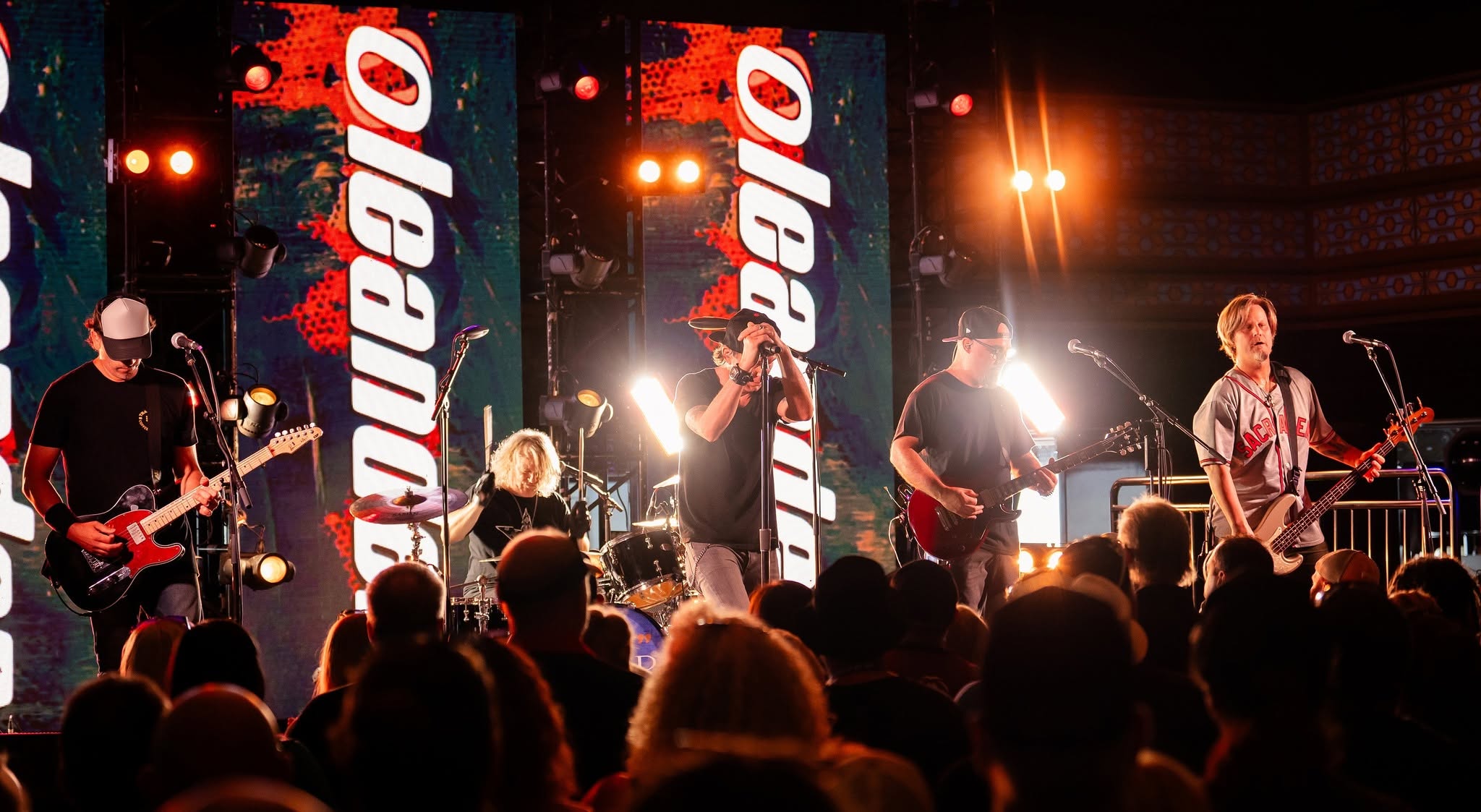
For Oleander frontman Thomas, music has always been about more than writing songs and stepping onto a stage. It is about perseverance, finding your place, and appreciating the people who make the journey worthwhile. After years of navigating the music industry, experiencing the highs and lows of success, and reconnecting with the band, Oleander is entering an exciting new chapter with fresh music, a new label partnership, and a renewed appreciation for the opportunity to keep doing what they love.
During a conversation with PressPlay, Thomas reflected on the band's early days in Sacramento, the unexpected success of their music, their unforgettable appearance at Woodstock '99, and what it means to be making music together again.
One of the most exciting announcements from the interview was the upcoming release of a newly recorded version of a song that has remained a fan favorite for decades. Originally an unreleased B-side, the track eventually found its way into American Pie 2, where it developed a following despite never receiving an official release. Thomas explained that the band has continued receiving requests for the song for nearly 30 years. Previously, fans could only find it on YouTube, but Oleander is finally preparing to make it available in a new version. The band expects the release to arrive within the next few weeks.
The conversation also revisited the success of February Son, particularly the unexpected journey of "Why I'm Here." Thomas explained that the band originally believed "I Walk Alone" would become the standout single from the record. In fact, it was the song they expected to close their shows with and the track they initially thought would have the biggest impact. However, "Why I'm Here" developed an incredible amount of momentum through radio play, eventually overshadowing much of the rest of the album. Its success was particularly meaningful because the band had spent years fighting for recognition.
That underdog mentality was especially evident when Thomas reflected on Sacramento's music scene during the 1990s. Often compared to Seattle for its creativity and musical diversity, Sacramento was home to an incredible collection of bands and artists. Oleander was part of that movement, but success did not come easily. The band was repeatedly passed over by record labels, and Thomas recalled being told he was too old to break into the industry. Rather than accepting those limitations, the band continued pushing forward.
Sometimes, making it meant getting creative. Thomas shared a story about regularly showing up at Sacramento radio station 98 Rock with donuts for the morning show hosts. What began as a simple gesture gradually developed into relationships, studio appearances, and opportunities to perform during the station's local programming. Eventually, program director Curtis Johnson offered to put one of Oleander's songs into regular rotation. Without a record label backing them, the band began charting strongly at the station. That support helped turn the industry's attention back toward Oleander, eventually opening the door to a record deal with Republic Records.
For Thomas, one of the defining moments of the band's career came at Woodstock '99. He recalled arriving at the festival without fully understanding the scale of what he was about to experience. Before reaching the stage, he unexpectedly crossed paths with James Brown, who stopped to wish the band good luck. As someone who grew up listening to Brown, the moment was surreal. Then came the walk onto the stage, where Thomas was met with an enormous horizon of people, cameras, and one of the biggest stages he had ever seen. It was there that something clicked. After years of being overlooked and fighting to prove himself, he finally felt that he belonged. It was a moment that confirmed this was what he wanted to do for the rest of his life.
Today, Oleander is approaching its next chapter with a new partnership with Sacramento-based SBG Records. Thomas described the connection as an immediate fit, pointing to the label's authenticity and genuine appreciation for the band. He was particularly impressed by Shan, whose passion and forward-thinking approach made an immediate impression. For Thomas, the relationship was never simply about adding an established band to a label's roster. It was about finding someone who genuinely believed in what Oleander was doing and wanted to be part of the journey.
He also emphasized how important trust has become when navigating the music industry. After experiencing so many different personalities and business relationships throughout his career, Thomas knows the difference between someone who is genuinely invested and someone who is simply looking for an opportunity. At this stage, he wants every professional relationship to be mutually beneficial, built on authenticity, and grounded in trust.
Music discovery was another major part of the conversation when Tina introduced PressPlay's SongStory questions. Thomas credited his 19-year-old son with helping him rediscover his excitement for music after stepping away from the industry for a period of time. Through attending concerts and festivals together, his son introduced him to artists outside his usual musical world, including Turnstile, Audrey Hobert, and The 1975. He also developed a renewed appreciation for Kendrick Lamar and Radiohead, particularly albums like Kid A, In Rainbows, and A Moon Shaped Pool.
One artist who has remained especially important to him is Walter Schreifels. Thomas spoke enthusiastically about Quicksand and Rival Schools, particularly United by Fate, describing it as one of his favorite albums. He even shared that it has become something of a travel ritual, playing the record every time he flies to Sacramento. It is an album he has listened to countless times and continues to return to.
When asked about his first music purchase, Thomas remembered discovering U2 while traveling to Boston as a kid. At the time, the band was much more familiar to audiences on the East Coast than in Sacramento. He saved his money to purchase a 45 from the band's War era along with a poster from Newbury Comics in Cambridge. He returned home excited to introduce everyone to the band, only to discover that nobody seemed particularly interested. Looking back, he joked that it was one of the few times he was ahead of the curve.
His most recent concert purchase brought things full circle with another legendary band. Thomas attended Oasis at the Rose Bowl, finally getting the opportunity to see one of his all-time favorite groups after waiting approximately 15 years. He described the experience as reliving his childhood, admitting that he spent the entire show singing every lyric at the top of his lungs. Beyond the songs themselves, he was struck by the band's energy and the genuine appreciation they seemed to have for their audience.
That appreciation is something Thomas now brings to his own performances. After recently completing a demanding run of shows that included approximately 1,600 miles of travel in three days, he explained that some of his favorite moments happen after the music stops. He makes a point of meeting fans, talking with them, and hearing their stories. During the run, he encountered people who had traveled all the way from Canada specifically to see Oleander, some of whom had been waiting since 1999 for the opportunity. Those interactions have become one of the most rewarding parts of being back on the road.
The interview also took a more personal turn when the conversation shifted to "30/60/90," a track from the band's earlier material. Thomas explained that the song references the milestones associated with recovery programs and hinted at his own struggles with substance abuse during the band's touring years. He reflected on the demanding lifestyle of being in a touring rock band, where recording an album could mean leaving family behind for five months at a time. Without the technology that makes staying connected easier today, the constant travel and long stretches away from home became difficult to navigate.
Thomas spoke candidly about recognizing the severity of his struggles and how his journey eventually brought him into recovery. He also shared a memorable encounter with another musician he had once viewed as an example of what not to become, only to later discover that the same person had gotten sober before him. Their reunion at a meeting became a moment of humor and connection. His willingness to share that experience highlighted another side of his story, one that extends beyond the music and reminds listeners that even the people behind the songs have their own battles.
That perspective is also reflected in the band's newer material. Discussing "Fourth of July," Thomas explained that the song represents the feeling of returning to the band and realizing just how fortunate they are to still have one another. Having played alongside Doug since the beginning, he described the experience of looking around after their recent shows and feeling grateful that they are still making music together. The song's meaning extends beyond the band, encompassing his wife, children, and the people who matter most in his life.
Even the artwork for "Fourth of July" came from a personal connection. When considering the visual direction for the single, Thomas felt that nothing represented the holiday quite like a Bomb Pop. The band ultimately embraced that imagery for the artwork and its accompanying AI-generated music video, which became another talking point during the interview.
For Thomas, the excitement surrounding the band's return is rooted in a simple idea: music should be fun. After everything they have experienced, Oleander has reached a place where they no longer feel the need to force anything. If it stops being enjoyable, they are not interested in continuing just for the sake of it. Instead, they are focused on writing music that feels authentic, connecting with audiences, and appreciating the opportunity to share the experience.
From the Sacramento music scene to Woodstock '99, from the unexpected success of "Why I'm Here" to the excitement of releasing new music, Oleander's story has always been one of persistence. But perhaps the biggest takeaway from Thomas's conversation with PressPlay is that the band is not simply revisiting its past. It is building something new with the experience, perspective, and gratitude that only time can bring.
After everything, Oleander is still here. And they are clearly having a great time doing it.